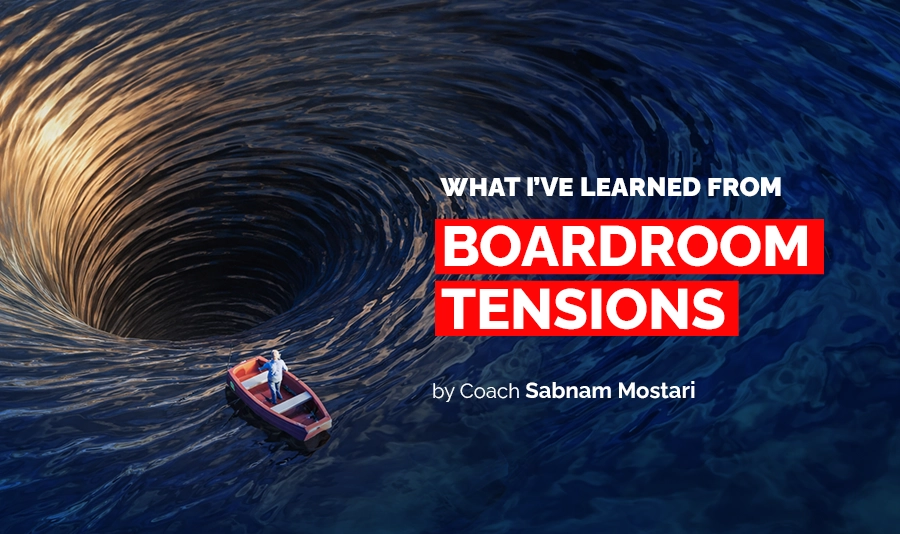
There is a specific kind of gravity that settles over a high-stakes meeting, a boardroom tension that feels like a whirlpool, pulling even the most seasoned directors toward its center.
A long time ago, I found myself in two very different boardrooms in the same week.
In the first one, a family conglomerate entering its third generation, the young director had just returned from overseas, full of ideas about ESG and digital governance. His father, the Chairman, listened quietly. Then he said, almost gently, “Son, we built this on relationships, not reports.”
The room went silent. I watched the independent directors shift in their seats. No one spoke. The meeting ended with polite nods and tea, but nothing was decided.
Three days later, I was in another boardroom. This time, it wasn’t silent at all, it was loud. The CEO was defending numbers. Two non-executive directors were pushing back on risk. The Audit Committee chair looked frustrated. The Chairman tried to calm things down, but old loyalties surfaced quickly.
Both boards were intelligent. Both had strategies on paper. But both were stuck, not because they lacked competence, but because no one knew what to do with the tension in the room.
That’s when I realized: tension isn’t the problem. “Ignoring it” is.
The Boardroom Tensions I Keep Seeing
Over the years, I’ve sat with dozens of organizations, mid-management, top management, and boards. The faces change, but the patterns repeat.
The Generational Gap
Founders who built empires with instinct versus successors trained in frameworks. Legacy versus innovation. Emotion versus structure.
In family businesses especially, this isn’t just about business; it’s personal. And that makes it harder to talk about.
Unclear Roles
Where does the Chairman’s role end and the CEO’s begin? Are independent directors really independent, or are they just old friends? Is the board here to guide strategy or approve budgets?
When no one’s clear on their role, accountability disappears. And tension fills that gap.
The Trust Problem
Sometimes it’s subtle. A director questions a financial report. Another doubts whether ESG commitments are real or just for show. Management senses the mistrust and becomes defensive.
Trust doesn’t break loudly. It erodes quietly, meeting after meeting.
Short-Term Pressure vs. Long-Term Vision
“Should we invest in sustainability now, or focus on this quarter’s returns?”
This tension shows up in every board I work with. And honestly, I don’t think it ever fully goes away. It just needs to be “managed” better.
The Communication Style Clash
Some boards talk too much, everyone wants airtime, no one listens. Other boards barely talk at all, politeness replaces honesty.
Neither builds alignment.
What I’ve Had to Learn the Hard Way
When I started coaching boards, I thought my job was to fix things. I’d come in with frameworks, tools, and best practices. I wanted to help.
But I learned quickly: boards don’t need another consultant telling them what to do. They need someone who helps them to see what’s already happening.
So I’ve had to shift. Here’s what I now pay attention to:
Who’s Speaking, and Who Isn’t
I watch the energy in the room. Who dominates the conversation? Who stays quiet? Who checks their phone?
The dynamics matter more than the agenda.
What’s Behind the Words
When someone says, “I’m concerned about risk,” what are they really saying? Is it about numbers, or is it about trust? Is it strategy, or is it ego?
I’ve learned to listen for the emotion underneath the business language.
Whether the Process Actually Helps
Are the agendas strategic or just box-ticking? Are committee reports meaningful, or are they there because “that’s what we always do”?
Good governance isn’t about following a template. It’s about having the right conversations at the right time.
The Unspoken Expectations
Founders expect loyalty. Next-gen expects a voice. Independent directors expect transparency. Management expects guidance, not micromanagement.
When these expectations aren’t named, tension becomes personal.
Whether There’s Psychological Safety
Can people disagree without fear? Can the CEO admit uncertainty? Can a junior director challenge a senior one?
If the answer is no, the board isn’t really governing. It’s performing.
The Challenges I Still Face
Coaching boards isn’t easy. Even now, I struggle with some things:
When People Don’t Want to Change
Some boards hire me because they have to, not because they want to. The regulator is pushing, or a crisis forced their hand. In those cases, resistance is high. I’ve learned to be patient, but it’s hard.
When Family Dynamics Overpower Governance
In family businesses, emotions run deep. I’m not just working with a board, I’m working with fathers and sons, siblings, cousins. Sometimes, years of unresolved family issues show up in the boardroom. And I’m not a family therapist.
When Silence is Mistaken for Agreement
In some cultures, openly disagreeing with elders or founders is seen as disrespectful. So people stay silent. But silence doesn’t mean consensus, it means unspoken resistance. Breaking that pattern takes time.
When I’m Seen as an Outsider
Sometimes, I sense that board members don’t fully trust me. They wonder, “What does she know about our industry? Our history?” I’ve had to learn to earn credibility slowly, through presence and empathy, not just expertise.
What I Do as a Coach
I don’t come in with answers. I come in with questions.
I Act as a Mirror
I reflect back what I see, without judgment. “I noticed three people spoke for 80% of the meeting. What does that tell us?”
I Help Translate Conflict
When two directors are clashing, I help them see it’s not personal, it’s two valid perspectives colliding. That shifts the energy.
I Strengthen the Basics
Clear roles. Better agendas. Smarter committee structures. Sometimes, governance isn’t glamorous, it’s just clarity.
I Create Safe Spaces
I facilitate sessions where people can say what they’ve been holding back. Not in the boardroom during a formal meeting, but in a separate, reflective space.
I Prepare the Next Generation
Succession isn’t just about handing over power. It’s about preparing someone to carry responsibility with humility. That takes mentoring, not just training.
What Changed in Those Two Boardrooms
It took months. It wasn’t linear.
In the family conglomerate, we started with something simple: a half-day retreat where the father and son could talk, really talk, with a facilitator present. Not about strategy. About expectations. About fears. About legacy.
That conversation opened something. Slowly, the independent directors started speaking up. Committees were restructured. Roles were clarified.
In the second boardroom, we worked on trust. We ran a governance health check. We brought in an external review of the risk framework. We created a clearer division between board oversight and management execution.
It wasn’t perfect. Tensions didn’t disappear. But they became workable. People stopped avoiding conflict and started managing it.
What I Believe Now
Tension in the boardroom is not a sign of failure. It’s a sign of life.
When people care deeply, about the business, about their role, about the future, tension will arise. The question is: what do we do with it?
Do we silence it with politeness?
Do we let it explode into conflict?
Or do we learn to shape it into something productive?
Coaching doesn’t eliminate disagreement. It creates the conditions for disagreement to become dialogue.
And when that happens, boards stop just governing. They start leading.
An Invitation
If you’re in a boardroom where things feel stuck, where meetings end with no real decisions, where people smile but trust is thin, where the next generation feels unheard or the founders feel disrespected, know this:
It’s not too late.
Tension is not the enemy. Unattended tension is.
Let’s not silence it. Let’s shape it.
Because within every tense boardroom lies the potential for something transformational.
And sometimes, all it takes is someone willing to sit with the discomfort and ask: “What’s really going on here?”
That’s the work I do. And it’s never easy. But it’s always worth it!
keypoints
Understanding Board Dynamics and Governance in High-Stakes Environments
Before we can address the friction, we must look at the underlying board dynamics and governance structures that shape these interactions. In my coaching diary, I’ve observed that tension rarely exists in a vacuum; it is often the result of shifting power structures or evolving strategic goals that have yet to be fully aligned within the boardroom.
From Friction to Conflict Resolution in the Boardroom
Navigating the whirlpool requires more than just patience; it requires a structured approach to conflict resolution in the boardroom. It is about moving from “who is right” to “what is right for the organization.” When we view tension as a data point rather than a threat, we can transform a heated debate into a governance breakthrough that serves the collective mission.
The Role of Emotional Intelligence for Board Directors
The difference between a board that fragments under pressure and one that thrives is often emotional intelligence for board directors. The ability to self-regulate, listen deeply to dissenting voices, and maintain presence during a “whirlpool” moment is what separates functional leadership from truly transformative governance.
Strengthening Governance through Executive Leadership Coaching in Bangladesh
As we look toward the future of our local corporate landscape, the demand for specialized executive leadership coaching in Bangladesh has never been higher. Navigating these complexities is a learned skill, and having a dedicated space to process these tensions is the first step toward building a resilient, sustainable legacy for the next generation.