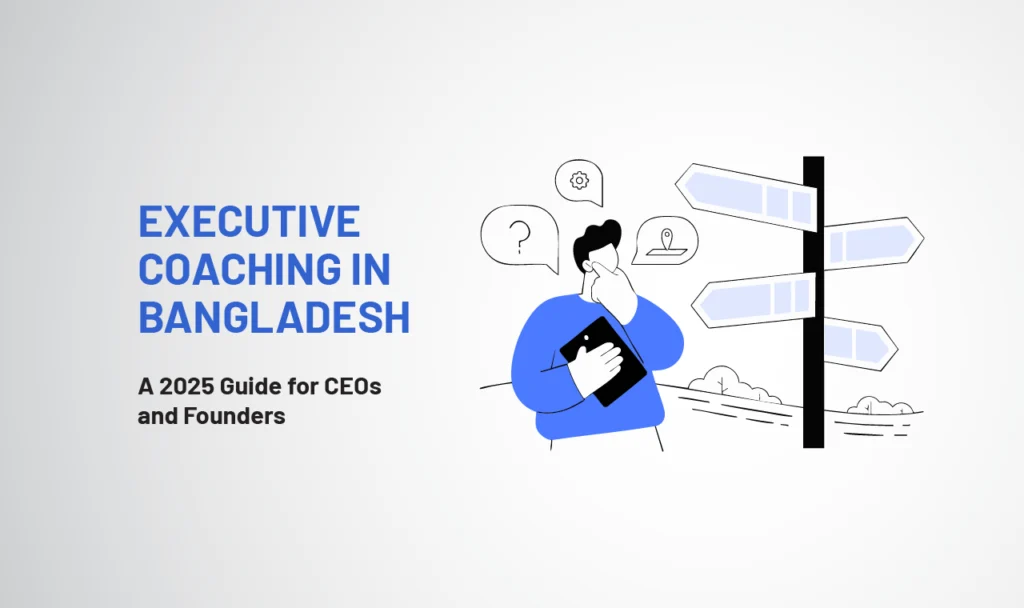
If you lead a fast‑growing business in Bangladesh, you already know how quickly the game is changing in 2025. Markets are maturing, teams are scaling, governance expectations are rising, and boards are asking tougher questions. Executive coaching in Bangladesh sits at the center of this shift. It is a confidential, structured partnership designed to help CEOs, founders, and senior leaders sharpen judgment, communicate with authority, build resilient teams, and deliver measurable results—without burning out themselves or the people around them.
What executive coaching is—and how it differs from business consulting or mentoring
Executive coaching is a forward‑looking, leader‑centric process that focuses on behaviors, decisions, and systems. A coach doesn’t write your strategy for you. Instead, they help you clarify outcomes, stress‑test your thinking, codify leadership habits, and create accountability so those habits stick. Consulting gives you answers; mentoring shares a playbook from someone who has “been there”; executive coaching builds your capacity to find the right answers faster and lead others to execute with clarity. In Bangladesh, leaders often combine these approaches, but the coaching component is what changes daily behavior and culture.
Who benefits most in the Bangladesh context
CEO coaching in Bangladesh is particularly effective when the organization is at an inflection point—entering a new market, professionalizing operations, preparing for investment, or navigating a turnaround. Founders use coaching to grow from scrappy operator to scale‑ready executive. C‑suite leaders use it to align cross‑functional teams and to translate board priorities into weekly execution. Family business principals rely on it to manage succession and modernize governance without losing values. Social enterprise and NGO leaders turn to coaching to balance mission and metrics. Whether you’re based in Dhaka, Chattogram, Sylhet, Khulna, Rajshahi, Gazipur, or Narayanganj, coaching supports both in‑person and remote realities.
Executive coaching vs. team coaching: when to choose which
Leadership coaching focuses on you as the decision maker; team coaching focuses on the dynamics among your executives. When the core challenge is clarity—vision, priorities, communication style, time use—executive coaching is the faster lever. When the challenge is coordination—silos, trust, ownership—team coaching can unlock collective performance. Most high‑growth firms in Dhaka adopt a blended approach: one‑to‑one CEO coaching paired with periodic team sessions to convert personal breakthroughs into organization‑wide habits.
How a 90‑day coaching program typically works
The first month is discovery. You and your coach translate broad ambitions into specific outcomes and select the right tools: leadership assessments, a lightweight 360 feedback process, or stakeholder interviews. The aim is to establish a baseline against a small number of business‑critical behaviors such as decisive prioritization, effective delegation, or clear executive communication.
The second month is design and practice. You turn insights into a plan with two or three developmental sprints. Each sprint includes a behavior goal, the practices that drive it, and the business metric it should touch—examples include shortening decision cycles, reducing meeting load while improving outcomes, or accelerating a strategic hire. Sessions are practical and forward‑focused, with fieldwork between meetings to test behaviors in real scenarios.
The third month is integration and measurement. You examine what changed, what stuck, and what still needs reinforcement. You review progress against both behavioral indicators and business results and you formalize an accountability rhythm so the gains last—often with a follow‑on cadence of monthly sessions or a shift to team coaching once the leader’s new habits are stable.
Measuring ROI without the guesswork
The ROI of executive coaching becomes visible when you connect behavior change to business outcomes you already track. Leaders in Bangladesh often measure shorter time‑to‑decision on key initiatives, improved retention and engagement in critical roles, faster hiring for leadership positions, more consistent quarterly delivery against OKRs, and better board communication that removes bottlenecks. A simple approach is to estimate the business value created by a specific shift—such as recovering executive time for higher‑value work, reducing voluntary attrition in pivotal teams, or closing a leadership hire sooner—and compare that to the program cost. When possible, revisit 360 feedback and pulse surveys to validate the change as perceived by your team and stakeholders.
Delivery models: Dhaka in person, online nationwide, or hybrid
Executive coaching Dhaka remains popular for leaders who value the privacy and energy of in‑room sessions. Online executive coaching in Bangladesh has become equally effective for distributed teams, offering flexible scheduling across Gulshan, Banani, Baridhara, Uttara, Motijheel, and beyond. Hybrid models typically front‑load in‑person sessions for discovery and critical inflection points, then shift to virtual for momentum and accountability. For many CEOs, English‑Bangla bilingual coaching is a practical edge, especially when the work includes inclusive leadership or storytelling across diverse audiences.
Credentials and credibility: what to look for in a coach
An executive coach in Bangladesh should combine hard‑won leadership experience with rigorous method. Many leaders prefer an ICF‑certified coach because the credential signals training, ethics, and supervision standards. Equally important is sector fluency—tech, manufacturing, banking, FMCG, energy, development—and the ability to translate frameworks into your context. Chemistry matters. Use an introductory session to test fit, align on outcomes, and agree on how progress will be measured. Ask for anonymized case snapshots so you can see how similar challenges were solved.
Pricing approaches and packages in Bangladesh
Executive coaching services in Bangladesh are typically offered in one of three ways. Some leaders choose session‑based engagements for targeted issues that require a few high‑impact conversations. Others prefer monthly retainers that bundle sessions with between‑session support such as quick check‑ins, document reviews, or stakeholder calls. Many CEOs opt for program packages that define a 90‑day or six‑month arc, including assessments, 360 feedback, and a structured plan. Pricing varies by coach seniority, assessment scope, and whether the work includes team facilitation or off‑sites.
Beyond the basics: inclusive leadership, ESG, and storytelling
Bangladesh’s leaders are increasingly judged not only by quarterly results but by how those results are achieved. Coaching that integrates inclusive leadership and unconscious bias helps executives build psychological safety and attract diverse talent. ESG leadership coaching equips you to translate sustainability commitments into credible goals, operating rhythms, and board‑ready storytelling. Narrative coaching teaches CEOs and founders to move stakeholders with clarity—crafting messages for teams, customers, media, and investors so strategy becomes a story people can carry.
A note on assessments, 360 feedback, and data
Assessments and 360 feedback in Bangladesh should be used as mirrors, not verdicts. Keep them short, focused, and tied to behaviors that matter for your strategy. Combine quantitative scores with verbatim comments so you can hear how your leadership lands on the ground. Re‑run the same instruments at the end of the program to track change, and share highlights with your team to build trust in the process.
Online or in person: choosing the right format for you
If your calendar is unforgiving, virtual sessions remove friction and widen your choice of coaches. If your leadership breakthroughs happen in dialogue and whiteboard work, in‑room sessions in Dhaka may be worth the travel. Many CEOs experiment with both and then commit to the format that sustains energy over time. What matters most is consistency: regular sessions, real fieldwork, and honest measurement.
For founders and family businesses
Founder coaching in Bangladesh often focuses on letting go without losing the company’s soul. The work typically includes role clarity between founder and CEO, decision rights as the org chart evolves, and habit shifts that free you from day‑to‑day firefighting. In family enterprises, coaching can mediate generational expectations, professionalize governance, and strengthen communication among siblings and cousins stepping into leadership. Progress becomes visible when key decisions move out of stalemate and into execution.
Final word and next step
Executive coaching in Bangladesh is no longer a luxury; it is an accelerant for leaders who need clear thinking, stronger teams, and reliable delivery in an increasingly demanding market. If you’re a CEO or founder ready to explore a focused, 90‑day engagement—or to design a hybrid plan that includes team coaching and leadership training—schedule a short conversation with DLeader Executive Coaching to define outcomes and make sure the chemistry is right. With in‑person sessions in Dhaka and online nationwide, a single, well‑designed DLeader coaching arc can reset how you lead for the rest of the year—book your consultation with DLeader Executive Coaching today.
Frequently asked questions (FAQ)
What exactly does an executive coach do for a CEO?
A coach is a thinking partner who helps you clarify outcomes, sharpen decisions, and build the leadership habits that scale your business. You set priorities together, test new behaviors in real situations, and hold a cadence that converts insight into measurable results.
How is executive coaching different from business coaching in Bangladesh?
Business coaching often leans into operational advice and playbooks. Executive coaching is leader‑centric and behavior‑focused. It strengthens judgment, communication, and team leadership so the organization performs better long after any single project is finished.
Is online coaching as effective as in‑person sessions in Dhaka?
Yes, provided the sessions are structured and supported by real‑world practice. Many CEOs prefer a hybrid approach that starts with in‑person discovery and continues online for momentum and accountability.
How do you measure the ROI of executive coaching?
Connect behavior change to outcomes you already track: faster decision cycles on strategic work, improved engagement and retention in critical roles, better OKR delivery, smoother board interactions, or time recovered for high‑leverage priorities. Revisit 360 feedback to validate the change from your stakeholders’ perspective.
What should I look for in the best executive coach in Bangladesh?
Prior leadership experience, a clear method, strong references, and ideally an ICF credential. Most importantly, choose a coach with whom you have the candor to tell the truth and the courage to change course when data demands it.